

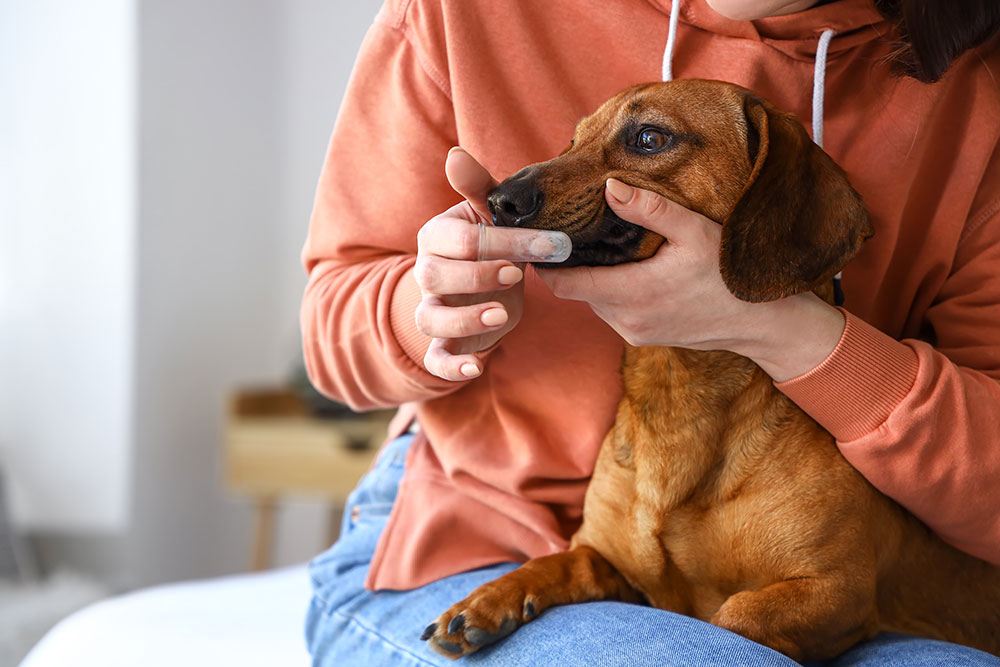
Trying to brush your pet’s teeth can feel a little like wrestling a tiny, furry alligator. One minute you’re armed with a toothbrush and optimism, the next you’re chasing your dog around the kitchen while they clamp their mouth shut like it’s a high-security vault. Cats, of course, often skip straight to the offended stare that says, “I trusted you.”
If this sounds familiar, you’re not alone. At-home dental care is one of the most challenging parts of pet ownership, but it is also one of the most important. Dental disease is extremely common in dogs and cats, and without regular care it can lead to painful infections, damaged teeth, and even health problems affecting the heart, kidneys, and other organs.
Livingston Veterinary Hospital in Livingston, MT pairs excellent modern medicine with a warmly personal approach, and our veterinary dental care services are built to complement a strong home routine. We can walk you through exactly how to introduce brushing or alternatives for dogs and cats who have never cooperated before. Contact us to set up a dental visit and get a home care plan that will actually get used.
Why Dental Home Care Is Worth the Effort
Periodontal disease begins with plaque, a soft bacterial film that forms on teeth within hours of cleaning. Left undisturbed, plaque mineralizes into tartar within days. Tartar irritates the gumline, triggering inflammation that progresses to gingivitis (gum inflammation), and then to periodontal disease involving bone loss, tooth root infection, and eventual tooth loss.
What makes periodontal disease especially worth preventing is its systemic reach. Chronic oral bacteria don’t stay in the mouth. Research has linked advanced dental disease to changes in kidney, liver, and cardiac tissue. The bacteria that drive gum disease can enter the bloodstream and affect organs far removed from the teeth.
Home care slows plaque accumulation and extends the interval between professional dental cleanings, but it does not replace them. The combination of consistent at-home effort and periodic professional scaling is what produces the best long-term outcomes. Our Livingston veterinary care includes full dental services, and we work with you to build a routine that bridges the gap between cleanings.
How to Know Which Products Actually Work
Look for the VOHC Seal
The Veterinary Oral Health Council (VOHC) is an independent organization that reviews clinical trial data submitted by product manufacturers and recognizes those that demonstrably reduce plaque or tartar. Products that meet the standard earn the VOHC seal of acceptance.
VOHC-accepted products include chews, water additives, diets, rinses, and gels across both dog and cat categories. The seal doesn’t appear on every effective product, since not every manufacturer pursues the process, but its presence is reliable assurance that the product has been tested and shown to work. It’s the most practical shortcut for navigating an otherwise crowded market.
Brushing: Still the Most Effective Option
Why Mechanical Cleaning Works
Toothbrushing removes plaque through direct physical disruption of the bacterial biofilm before it can harden. Daily brushing provides the highest level of protection, but every-other-day brushing still delivers meaningful benefit. Consistency over frequency perfection is the right mindset: a partial brush done daily beats a thorough one done once a week.
How to Actually Get Started
The biggest barrier to brushing is almost never the pet, it’s the introduction. Starting slowly and building gradually makes a dramatic difference in how a pet responds.
A practical progression:
- Spend a few days simply touching your pet’s muzzle and lifting the lips, rewarding calmly after each session
- Run a finger along the outer tooth surfaces and gumline
- Apply a small amount of pet-safe toothpaste to your finger and let them taste it
- Introduce a finger brush or soft-bristled toothbrush, starting at the front teeth
- Gradually extend to the back molars over days or weeks
Cooperative care techniques build confidence through short, positive sessions rather than restraint. Keep sessions to 30 to 60 seconds initially and always end before the pet becomes resistant.
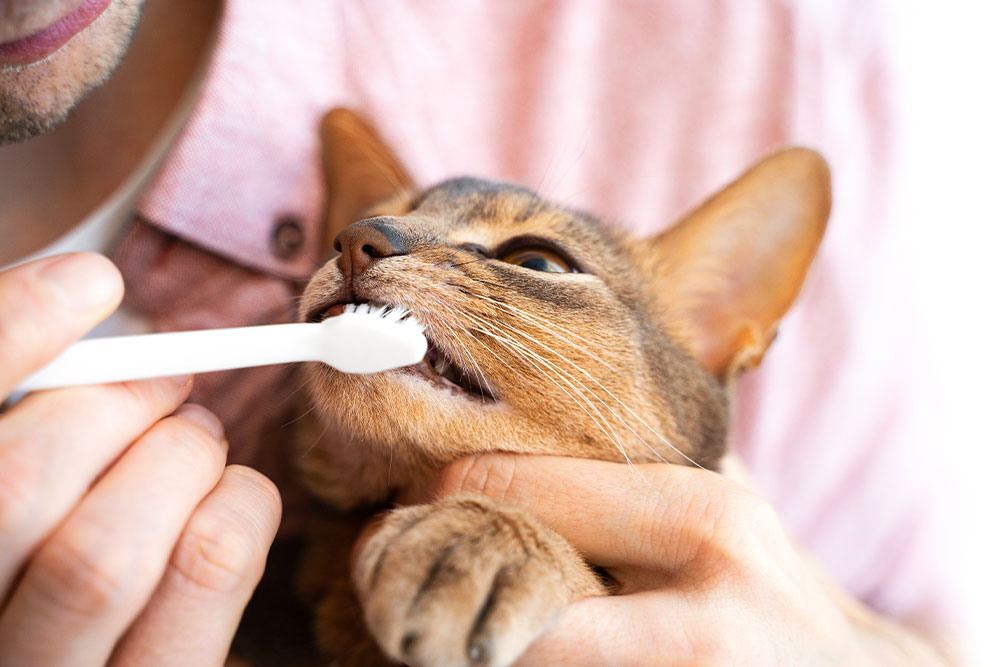
When brushing dog teeth, angle the bristles at about 45 degrees toward the gumline and use short circular or back-and-forth strokes. Focus especially on the outer surfaces of the upper back teeth, which accumulate tartar fastest. For brushing cat teeth, smaller brushes and gentler pressure are key, and working with cats often means shorter sessions spread across the day rather than one longer attempt.
Never use human toothpaste. Fluoride and xylitol, both common ingredients, are toxic to pets. Use only enzymatic or pet-formulated products. We can recommend the best products, including some with “fun” flavors like seafood or poultry, to make the process easier.
If you’re struggling, we’re happy to walk you through techniques for your pet at your next dental visit, including positioning for different sizes and handling suggestions for anxious animals.
What If My Pet Won’t Accept a Brush?
Dental Wipes and Gauze
For pets who refuse a brush, dental wipes or gauze wrapped around a finger provide friction-based plaque removal on accessible surfaces. They work best on the outer faces of the front teeth and canines and are less effective at reaching gumlines and back molars than a brush.
Wipes are a legitimate long-term option for some households and a useful bridge for pets still being introduced to brushing. Pairing them with an enzymatic product increases their effectiveness. If a pet tolerates wipes daily, they are doing meaningful work even if they never fully accept a brush.
Enzymatic Gels, Powders, Sprays, and Pastes
Dental products with special enzymes break down plaque chemically by targeting bacterial biofilm. Some products can be applied with a brush or finger, others are simply allowed to coat the teeth after licking from the owner’s hand or eating their food, and many require no rinsing. They work even without mechanical action, though combining them with any friction method improves outcomes.
Look for products that list lactoperoxidase or glucose oxidase enzyme systems on the label. Enzymatic products provide a meaningful layer of protection between brushings or as a standalone if other methods are not workable.
Water Additives and Oral Rinses
Water additives deliver antimicrobial or enzymatic ingredients through drinking, coating oral surfaces with each sip. They are the lowest-effort option and can be a practical supplement for pets who resist all hands-on care. That said, effectiveness varies significantly by product, and additives cannot remove existing tartar or replace mechanical cleaning. Introducing them gradually, starting with a small amount in a large bowl of water, helps ensure pets continue drinking normally.
Check in with us before selecting a water additive to confirm it’s appropriate for your pet’s current oral health status and that palatability is unlikely to become a problem with your specific animal.
Dental Diets and Chews as Part of the Plan
Dental Diets
Dental diets work through a combination of kibble structure and specific ingredients. The larger, fibrous kibble shape means teeth penetrate the food before it crumbles, providing mild abrasive cleaning at each bite. Some formulations also include compounds that bind calcium and reduce tartar mineralization. Like all home care tools, dental diets extend the interval between cleanings but do not eliminate the need for them.
Are Dental Chews and Toys Safe?
Chewing action physically scrapes plaque from tooth surfaces, and certain chews are designed specifically to maximize this contact. The critical safety rule is the thumbnail test: if you press your thumbnail into a chew and it doesn’t give or dent, it is too hard and risks fracturing teeth. Dangerous chew items include antlers, hooves, hard nylon products, and real bones.
Safe chew toys bend, flex, and compress under pressure. Dental chew toys designed with texture features that reach between teeth can contribute meaningfully to plaque removal when used regularly. Spread an enzymatic gel or paste on dental toys for extra effectiveness. Match the chew size to the dog and always supervise the first few sessions with a new product.
What Home Care Cannot Replace
Tartar that has already mineralized onto the tooth surface cannot be removed at home. Neither can the evaluation and treatment of disease below the gumline, where the most significant periodontal damage occurs. Professional dental cleanings under anesthesia allow us to scale all tooth surfaces including subgingival areas, polish enamel, probe pocket depths, and take dental radiographs that reveal bone loss and root pathology invisible to the naked eye.
The concern about anesthesia-free dental risks is worth understanding: procedures performed without anesthesia allow only superficial scaling of visible surfaces and provide no access to the gumline or diagnostic imaging. They create the appearance of cleaner teeth without addressing where disease actually lives. Proper anesthesia, with appropriate monitoring and pre-anesthetic bloodwork, allows for genuinely safe and complete care.
Good home care earns longer intervals between professional cleanings. It doesn’t eliminate the need for them.
Building a Routine That Sticks
The most effective dental care routine is the one that actually happens. Pairing dental care with an existing daily habit, like after the evening meal or before bedtime, makes it easier to remember and sustain. Keep early sessions brief and positive, and adjust the approach if resistance builds rather than pushing through it.
Practical tips for consistency:
- Keep supplies in a visible location so they’re easy to grab
- Involve all family members so the routine holds even when schedules vary
- Celebrate small wins like a pet who sits calmly for wipes, even if brushing is still weeks away
- Track breath and gum color as informal markers that the routine is working
- Have a back-up plan: On days you can’t brush, give a dental chew or add a dental powder to food
Any home care is better than none. Progress is nonlinear, and even a partial routine maintained over months produces results that skipping entirely cannot.
A Dental Health Partnership That Lasts
Consistent dental home care and professional cleanings work together as a system, and our team is part of that system. After every dental procedure, our certified veterinary technicians provide personalized post-procedure guidance, including before and after photos, feeding instructions, and home care coaching. Follow-up calls a few days after procedures ensure you feel supported as you build new routines.
If you’re not sure where to start or your pet has never accepted any form of dental care, that’s exactly the kind of challenge we’re ready to help with.Reach out and schedule an appointment to get a current dental assessment and walk away with a realistic home care plan built around your specific pet.




Leave A Comment