
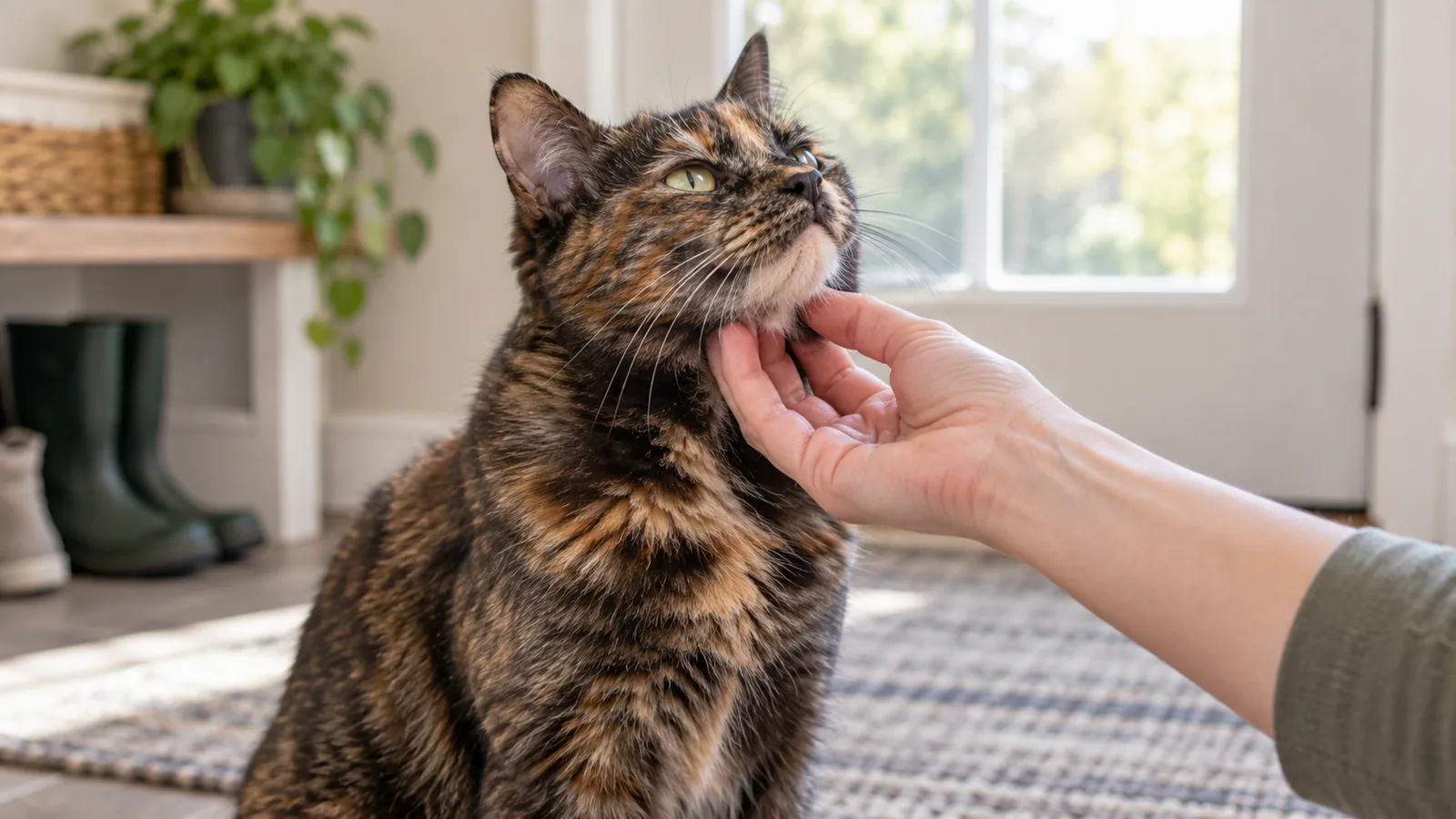
A swollen lymph node you can feel on your dog or cat is the immune system flagging something that needs attention: an infection nearby, inflammation, or in some cases cancer. There are five places where you can feel one on your pet: under the jaw, in front of the shoulders, in the armpits, in the groin, and behind the knees. When all is well those spots are soft and easy to miss, often too small to pick out at all, so the real value of checking is learning what normal feels like on your dog or cat. Your fingertips cannot tell an infection from cancer, and the earlier a change is noticed, the more options remain for finding out which one your pet has.
You should not have to decide on your own whether what you felt matters. At Livingston Veterinary Hospital, feeling the lymph nodes is part of every wellness exam, since much of our job is catching the subtle signs of illness that are easy to miss at home. When one is enlarged, we can test it directly, run bloodwork, and take X-rays or an ultrasound right here in Livingston to find out what is driving it. If you have found a new lump or swelling on your dog or cat, bring your pet in and have us feel it with you in the next couple of days rather than after weeks of watching.
Why the Pattern Matters More Than the Size
- Lymph nodes get big when the immune cells inside them multiply, most often against infection, though cancer and immune disease feel identical under your fingers.
- The pattern carries information: one enlarged node points to a local problem, while several at once suggests something body-wide.
- A fine needle aspirate takes seconds, rarely needs sedation, and answers the question most families are afraid to ask out loud.
- Catching a change early keeps more treatment options open, and a monthly two-minute check at home builds that habit.
Which Lymph Nodes Can You Actually Feel on a Dog or Cat?
Five sets sit close enough to the surface for your fingers to find them on a healthy dog or cat. Working from back to front, they are behind each knee, in the groin, inside the armpits, just ahead of the shoulder blades, and beneath the jaw. Those lymph node locations are where a change tends to show up first.
Each one works as a filter station. Fluid drains out of the tissues, passes through, and the immune cells inside inspect it for bacteria, viruses, and abnormal cells before mounting a response. An enlarged one means the cells inside have gone to work. Size is a message, not a diagnosis, and twice-yearly routine wellness exams give us the baseline that makes a subtle change obvious later.
What Happens at Our Hospital When We Find an Enlarged Lymph Node?
When we find an enlarged lymph node, the workup runs in order, from what our hands tell us to what a microscope confirms. We note which nodes are involved and how they feel, sample cells from the largest, then add bloodwork or imaging based on what those cells show. Most of it happens with your pet awake beside you.
What Can We Learn Just by Feeling the Node?
Palpation is more specific than it looks. We read size against what is normal for that spot, plus texture, symmetry side to side, tenderness, and whether the swelling slides freely or feels anchored underneath. Soft, warm, and sore usually means a node doing its job against something nearby. Firm, painless, and rubbery moves an aspirate to the top of the list.
What Does a Fine Needle Aspirate Show, and When Is a Biopsy Needed?
Most families brace for worse than what happens. Fine needle aspiration is over in seconds, the needle is the same kind used for a vaccine, and sedation is rarely needed. Cytology tells us which cell population has taken over: immune cells reacting, inflammatory cells from infection, or a sheet of identical lymphocytes pointing toward lymphoma. Slides usually go to a clinical pathologist, and on a case like this we want that specialist read.
When the cells come back inconclusive, or when the subtype changes the plan, a biopsy preserves tissue architecture that loose cells cannot show. Taking a whole node or a wedge of one means anesthesia and a small incision. We do that soft tissue surgery in-house, and confirming a diagnosis never has to mean a trip over the pass.
What Do Bloodwork and Imaging Add?
Cells from one node describe one node. A complete blood count and chemistry panel describe the rest of your pet: anemia, low platelets, white cell changes, or organ values that reframe the picture. Both run on our in-house laboratory equipment. Tick-borne testing belongs in the workup for most Montana dogs, and for cats we add feline leukemia and feline immunodeficiency virus testing early.
Chest X-rays and abdominal ultrasound reach the nodes your hands cannot: enlarged nodes deep in the chest or belly, a big spleen, liver changes. When lymphoma is a real possibility, imaging is what stages the disease, and stage and subtype together drive the prognosis conversation.
Why Are My Dog's or Cat's Lymph Nodes Swollen?
Your dog's or cat's lymph nodes swell for one of three reasons: infection or inflammation draining into a node, cancer growing inside it, or an immune system turning on the body's own tissue. The pattern narrows the field before any test runs: which nodes are big, how they feel, and whether the swelling sits in one spot or spreads.
| What you feel | Likely meaning | Our next step |
| One warm, tender node near a wound, sore tooth, or skin infection | A local reaction to something draining into it | Treat the source, recheck the node |
| Both jaw nodes, nothing else | Mouth, tooth, or upper airway trouble | Oral exam and dental X-rays |
| All five sets firm, enlarged, painless | A body-wide process: lymphoma, tick-borne, or fungal disease | Aspirate and bloodwork, promptly |
| Swollen nodes with fever, limping, or bruising | Tick-borne infection or immune-mediated disease | Bloodwork, tick testing, joint sampling if needed |
| A node fixed to the tissue beneath it | Something invasive rather than reactive | Aspirate, then biopsy if cells don't answer it |
Which Infections Make Lymph Nodes Swell?
Infection explains more swollen nodes than every other cause combined.
- Ticks and what they carry: A single bite can hand a dog ehrlichia and anaplasma, with enlarged nodes across the body showing up weeks later alongside fever, sore joints, or a drop in platelets. Lyme disease looks much the same, often with lameness that shifts from leg to leg.
- Bacteria from water, bites, and bad teeth: Leptospirosis travels in water fouled by wildlife urine, making creeks, puddles, and irrigation ditches a real exposure route for Montana dogs. Cats who hunt pick up mycobacteriosis through a bite or a wound contaminated by rodent tissue, showing non-healing skin nodules with firm nodes beside them. Far more often, though, the culprit is an abscessed tooth or a bite from a scuffle.
- Viruses in cats: Feline leukemia and feline immunodeficiency virus each enlarge nodes and change how we read everything else, and testing comes early for any cat with widespread swelling.
- Fungal, and where your pet has been: Travel history matters. A dog who wintered in Arizona or southern California can come home with Valley Fever, which enlarges nodes and often settles into bone or lungs. Histoplasmosis turns up in river valleys farther east, and aspergillosis is possible in most regions.
- Parasites, inside and out: Toxoplasmosis matters most for cats with access to prey or raw meat. A heavy intestinal worm burden, or a flea or mite problem that keeps skin inflamed, keeps the nodes draining that area enlarged until the irritation stops.
When Does a Swollen Node Mean Cancer?
Canine lymphoma is the reason a dog can eat well, run the same trails, and still grow firm, painless nodes the size of golf balls under the jaw within a week or two. That mismatch is exactly how these swellings get dismissed at home.
Lymphoma will eventually affect one in fifteen dogs born today, and the figure rises to roughly one in eight in Golden Retrievers. Lymphoma is also among the more treatable cancers in dogs when it is caught early. Subtype steers everything after that: B-cell and T-cell disease respond differently and carry different timelines, and accurate testing at the start shapes the plan.
Feline lymphoma settles in the intestinal tract far more often than in the nodes you can feel. The first signs in a cat are usually weight loss, intermittent vomiting, or a slow fade in appetite. Mast cell tumors, oral melanoma, and carcinomas reach the node draining the area first, and we sample that node even when a lump elsewhere is the obvious concern.
What About Immune Conditions and Vaccine Reactions?
Not every non-infectious cause is cancer. Immune-mediated hemolytic anemia turns the immune system against red blood cells it should be protecting, and what shows up at the exam table (weakness, pale gums, reactive nodes) looks exactly like a bad infection. Lupus and immune-mediated polyarthritis behave similarly, adding stiff joints and a fever that comes and goes.
A node near a recent injection site can stay up for a few days. Most vaccination reactions amount to an immune system rehearsing the response the shot was designed to trigger, though swelling that keeps growing or lingers past a week deserves a look.
How Are Swollen Lymph Nodes Treated in Dogs and Cats?
How we treat a swollen lymph node depends entirely on what the sample shows, and the order matters. Antibiotics do nothing for lymphoma, and a steroid started before a node is sampled can blur the cells badly enough to delay a real answer by weeks. Never give a leftover prescription from a past illness while a swollen node is unexplained.
| Once the sample names it | What care usually looks like |
| Lymphoma | Chemotherapy aimed at remission, or steroid-based comfort care, chosen together |
| Tick-borne illness | Doxycycline for a full course, with recheck labs to show it worked |
| A bacterial infection in one spot | Targeted antibiotics, plus repairing the source, whether that is a tooth or a wound |
| Immune-mediated disease | Medication to quiet the immune response, tapered slowly once things hold steady |
| Fungal infection | Antifungal medication for months, with bloodwork checks along the way |
With lymphoma, what most patients get is time in remission instead of a cure, and you deserve that said plainly. Dogs tolerate chemotherapy far better than people expect, since the protocols are built around quality of life instead of maximum dose. We consult with specialists on complicated cases, and we will tell you which parts we handle here and which need a referral.
Which Swellings Are Emergencies and Which Can Wait?
Whether a swollen node is an emergency comes down to how your pet is breathing, how fast the swelling is changing, and what else has shifted at home. The three groups below sort almost every case we see.
- Right now: labored or open-mouth breathing, a swollen face or muzzle, pale gums, sudden weakness or collapse, or swelling that grows by the hour. A large node in the neck can press on the airway, and a cat working to breathe is always an emergency.
- Within 48 hours: a node that is newly enlarged or bigger than at your last check, or any swelling that comes with weight loss, appetite change, or low energy.
- Within the week: a node that has held the same size for months in a pet who eats, plays, and acts like themselves, or minor swelling near a vaccine site.
Not sure which group you're in? Call us and describe what you're feeling. Our team handles urgent care during our regular hours, and after hours our main line connects you with the veterinarian on call; if no one is available, you'll be directed to a 24/7 emergency facility.
Can You Lower the Odds of Lymph Node Trouble?
Lymphoma isn't preventable, but a surprising share of the other causes are. Year-round parasite prevention, current vaccinations, and a healthy mouth take most infectious triggers out of play.
- Parasite prevention: Consistent tick control is the best defense against the tick-borne infections that swell nodes body-wide, and flea and mite control keeps skin from staying inflamed.
- Vaccination: The leptospirosis vaccine earns its place for dogs who swim, wade, or drink from ditches, and feline leukemia vaccination matters for cats who go outside.
- Dental health: The jaw nodes sit directly downstream of the most common chronic infection in dogs and cats. A professional dental cleaning with dental X-rays clears the bacterial load that keeps those nodes activated.
- Extra sets of hands: For pets who board with us, our team is hands-on every day, and anything new gets flagged for you and the doctor.
Blood-based screening tests can flag lymphoma months before the first enlarged node appears, and that head start keeps the widest range of options open. For a Golden Retriever, a Boxer, or any dog heading into middle age, screening is worth asking about.
What Does a Home Lymph Node Check Actually Involve?
A home check needs nothing but your hands and about two minutes. Settle your dog or cat on the floor or in your lap, then work forward with light fingertips: behind each knee first, then the groin, the armpits, the point of each shoulder, and finally the jaw. You are not measuring anything, only noticing.
Normal nodes are barely detectable and slide easily under the skin. Pair the check with the evening brush-out or the post-walk cooldown. Do not squeeze or press hard at a swelling, and skip hot compresses and home remedies, since neither helps and both can inflame the area. If you feel something larger or firmer than last month, reach out and tell us what changed.
Your Swollen Lymph Node Questions, Answered
Do reactive nodes ever settle back down without treatment?
Reactive nodes do sometimes settle on their own once whatever provoked them is handled, whether that is a treated tooth, a healed scratch, or a finished course of medication. The trouble is that a node about to resolve and a node about to double in size feel the same on day one. A quick exam settles the question faster than a month of checking and wondering.
Do swollen lymph nodes hurt my dog or cat?
Most enlarged nodes aren't painful, which is part of what makes them easy to overlook. A node reacting to an active infection nearby can be warm and tender, and your pet may pull away from your hand. Lymphoma nodes are typically painless, and a dog can carry golf-ball-sized swellings without a hint of discomfort. Very large nodes in the neck are the exception, since they can press on the airway or make swallowing awkward.
My cat's nodes feel normal but they're losing weight. Should I still worry?
Normal-feeling nodes don't rule out lymphoma in cats, because the intestinal form is far more common than the kind you can feel. Steady weight loss, occasional vomiting, or a cat gone quiet about meals deserves bloodwork and an abdominal ultrasound regardless of what you feel under the jaw. Hyperthyroidism, kidney disease, and diabetes create the same picture, and all three are worth finding early.
Getting a Straight Answer About That Lump, Right Here in Livingston
The hardest part of finding a lump usually isn't the lump. It's the stretch of days spent wondering what it means. A node reacting to a tick picked up along the Yellowstone and a node that needs an oncologist feel about the same under your fingers, and a few minutes with a needle and a microscope usually tells us which one you're holding.
Livingston Veterinary Hospital would rather check ten swellings that turn out to be nothing than miss the one that isn't. If you found something this week, request an appointment and we'll sort it out together.